
Ayman Al-Hendy
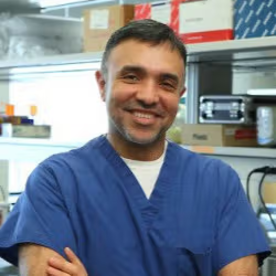
Dr. Ayman Al-Hendy, MD PhD FRCSC FACOG CCRP
Dr Ayman Al-Hendy is currently a Professor @ Department of Medical Sciences, College of Medicine and Health Sciences, Khalifa University, UAE. He is also a professor (Tenure), Department of Obstetrics and Gynecology, Pritzker School of Medicine, University of Chicago (UC). Dr. Al-Hendy is a Gynecologist and minimally-invasive Surgeon with a busy practice that focuses on serving women with symptomatic uterine fibroids and premature ovarian insufficiency. Dr. Al-Hendy graduated from Banha Faculty of Medicine, Zagazig University, Banha, Egypt in 1986. After 1 year of internship at Banha University Hospital, he headed to Finland to earn his PhD in Molecular Medicine from University of Turku, Turku, Finland. He then gained additional postdoctoral training in gene/cell therapy and clinical molecular genetics at McMaster University and McGill University in Canada, before completing clinical residency training in Obstetrics and Gynecology at University of Saskatchewan and fellowship training in laparoscopic surgery at Toronto University, both in Canada. Dr. Al-Hendy is double board certified by the Royal College of Surgeons of Canada and The American Board of Obstetrics and Gynecology. In United States of America, Dr. Al-Hendy held various faculty positions at University of Texas Medical Branch, Galveston, Texas, Meharry Medical College/Vanderbilt University, Nashville, Tennessee, and Medical College of Georgia, Augusta, Georgia, before moving to Chicago, Illinois.
Dr. Al-Hendy utilizes the methods of basic, translational, clinical and community research to address important medical diseases. Dr. Al-Hendy medical research interests focus on developing novel therapies including gene and stem cell therapy for Premature Ovarian insufficiency, Endometriosis, and particularly Uterine Fibroids. He has championed the use of specific natural fertility-friendly non-hormonal compounds such as green tea extracts (Epigalcatchin Gallate, EGCG) and vitamin D for prevention and treatment of uterine fibroids. He was first (2010) to introduce hypovitaminosis D as a risk factor to development of uterine fibroids and a contributing reason of why they are much more prevalent in women of color. An observation that has been confirmed subsequently by numerous publications globally.
Dr. Al-Hendy also pioneered (2009) the concept of enhancing ovarian folliculogenesis via direct intra-ovarian injection of appropriate augmenting biologics. After ample preclinical work on utilizing human bone marrow mesenchymal stem cells or its exosomes (naïve or enhanced) to treat representative animal models, Dr. Al-Hendy has started clinical trials to translate such innovative approach to women suffering from premature ovarian insufficiency as well as other ovarian causes of infertility.
In 2010, Dr. Al-Hendy was awarded the American Society of Reproductive Medicine’s (ASRM) 2010 Ira and Ester Rosenwaks Award for his significant contribution to the field of translational Reproductive Biology. In 2014 he received the alpha Omega alpha clinician scientist of the year award by the Medical Honor Society and in 2015 the President Achievement Award as well as Rogerio A. Lobo Award from the Society of reproductive Investigations (SRI). Dr. Al-Hendy research has been continuously funded by various agencies since 2002 including NIH (NICHD, NIEHS, NIMHD, ODS, OD, NCRR), USDA, and other national and international organizations. He has served as Chair of the NIH Integrative Clinical Endocrinology and Reproduction (ICER) IRG 2013-2015 and also serves on numerous other committees with organizations such NIH, ASRM, SRI and as Co-Editor-in-Chief of The SRI Journal, Reproductive Sciences as well as on several editorial boards of high impact journals. Dr. Al-Hendy has been elected as SRI 71st President. He has published more than 306 peer reviewed medical articles in high tier peer reviewed scientific journals with more than 16,000 citations in the understudied area of non-malignant (benign) gynecology (H-index 70), above 450 presentations in national and international meetings, and has edited 5 medical books.